

The Science of Touch: How Montessori Educational Toys Build Better Brains
Introduction: More Than Just Feeling
Did you know that the fingertips are among the most sensitive parts of the human body? For a toddler, touch is their primary language. Before they can speak, they learn about the world by grasping, feeling, and sensing.
While many educational toys focus on flashing lights and sounds, true development happens when a child engages with texture. This is why our YUCI Wooden Tactile Board is a staple in our collection of wooden montessori toys.
Why Texture Matters for Brain Development
In Montessori education, we talk about "Stereognosis"—the ability to recognize an object through touch alone. When a child runs their fingers over the ridges of a wooden puzzle or the smooth surface of a wooden block, their brain is firing millions of synapses.
Plastic toys often feel the same: smooth, cold, and synthetic. Wooden toys for kids, however, offer variety. Grain, warmth, and weight differences teach a child about the physical reality of our world.
Spotlight: The YUCI Tactile Discovery Board
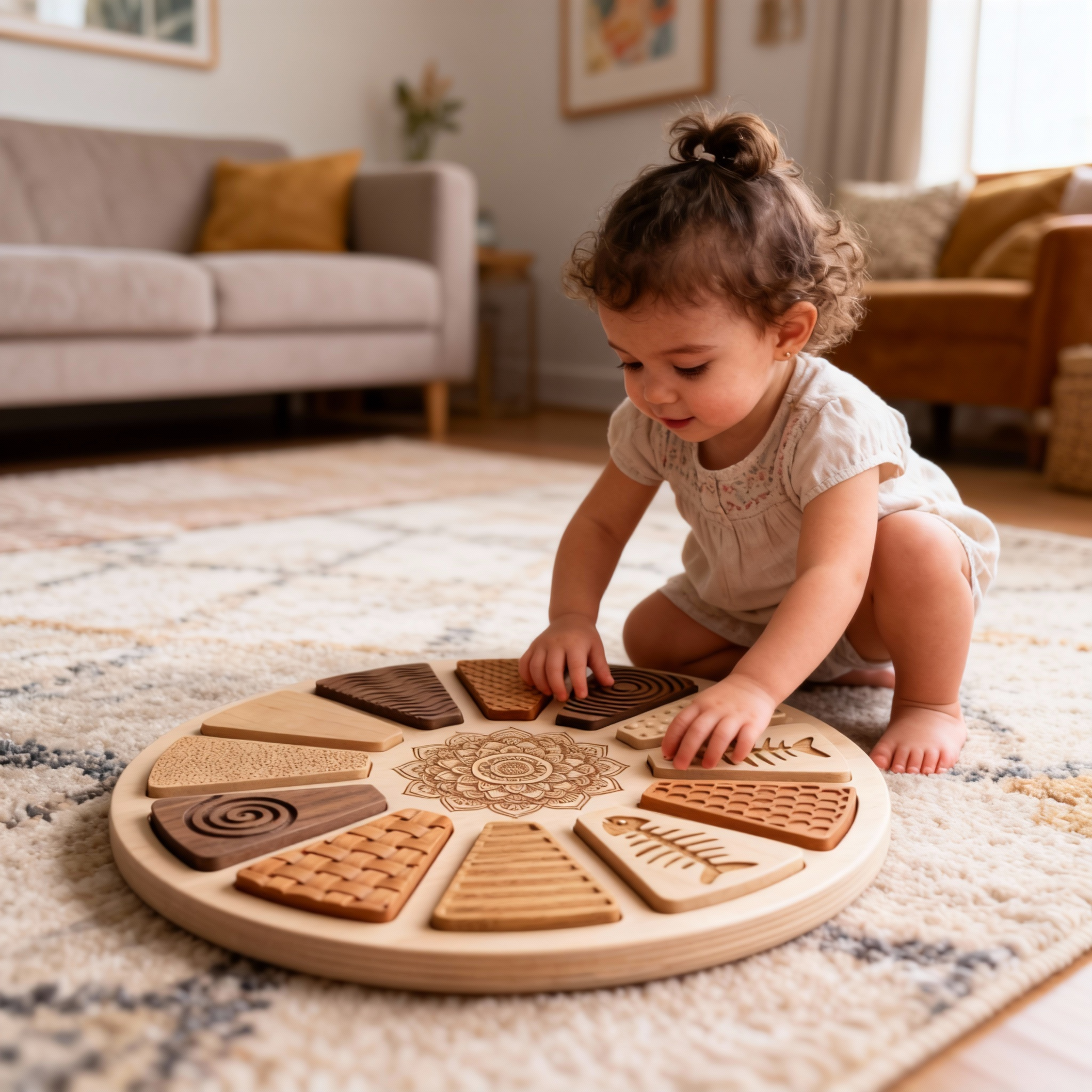
Our signature Tactile Board is designed to be one of the best educational toys for sensory integration. It features 12 distinct wedges, each carved with unique patterns—waves, dots, grids, and spirals.
How to Play:
-
Visual Matching: For younger toddlers, simply matching the patterned block to its corresponding slot on the base is a great puzzle.
-
Descriptive Language: Use the board to teach adjectives. "This one is bumpy," "This one is smooth."
-
The Blindfold Challenge: This is the ultimate montessori educational activity. Blindfold your child (or ask them to close their eyes) and have them match the textures purely by feel. This deepens concentration and builds sensory memory.
Conclusion
In a digital age, tactile experiences are rare. By choosing wooden educational toys like our Tactile Board, you are giving your child the essential gift of sensory connection.



